The Illusion of Perfection: Balance, Control, and Movement in Greek Sculpture

5 artworks 42 views Walk Through in 3D

Artworks

  • Title & Curatorial Text (2026)
  • Anavysos Kouros, Unknown Artist, Year c. 530 BCE, Marble (530) — The Anavysos Kouros presents a very early attempt to represent the ideal human body through symmetry and balance. The man stands upright with one foot forward, but the weight is evenly distributed, creating a rigid and static pose. The body is very symmetrical, with clearly defined muscles that emphasize ideal proportions rather than natural movement. Kouros statues were often used as grave markers, representing youth and strength. In this exhibition, the sculpture represents the beginning of the Greek effort to construct the “perfect” body. However, its stiffness shows that artists had not yet developed a full understanding of how the body moves and works. Compared to later works, the Kouros emphasizes control without naturalism. It establishes the foundation for my exhibition by showing how the ideal body was first imagined as balanced and ordered, but not yet lifelike.
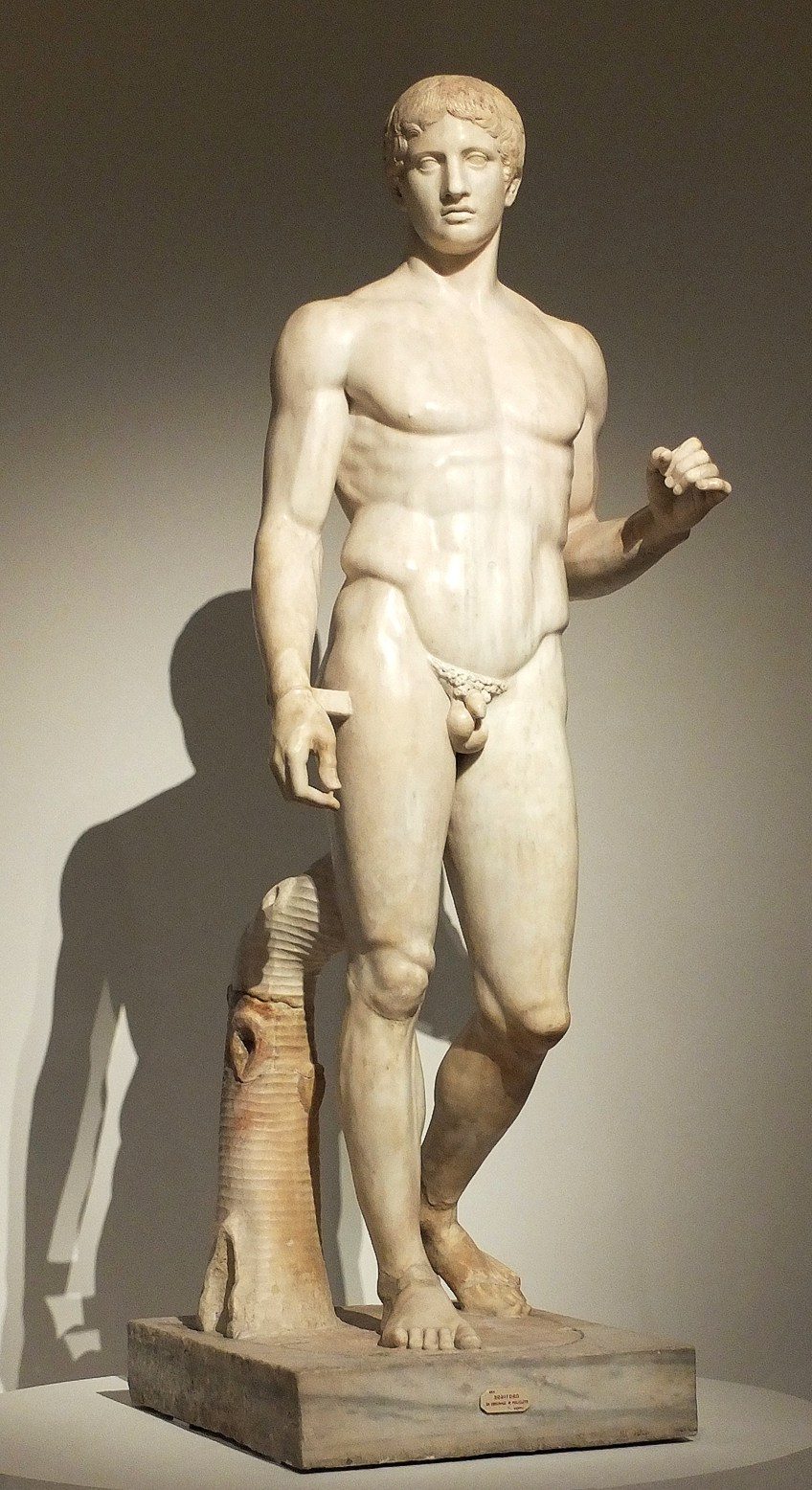
  • Doryphoros, Polykleitos, Year c. 440 BCE, Marble (440) — The Doryphoros by Polykleitos represents a major development in the representation of the ideal human body. The male figure stands in contrapposto, with the weight shifted onto one leg, creating a more natural and dynamic stance. This shift introduces asymmetry, allowing the body to appear more lifelike while still maintaining strong balance. Polykleitos designed the sculpture based on his theory of the Canon, which used mathematical proportions to define ideal beauty. The careful relationship between the different parts of the body creates harmony and unity. In this exhibition, the Doryphoros builds on the rigid structure of the Kouros by combining control with natural, flowy movement. It shows how Greek artists began to refine their understanding of the body, moving toward a more convincing illusion of what perfection is.
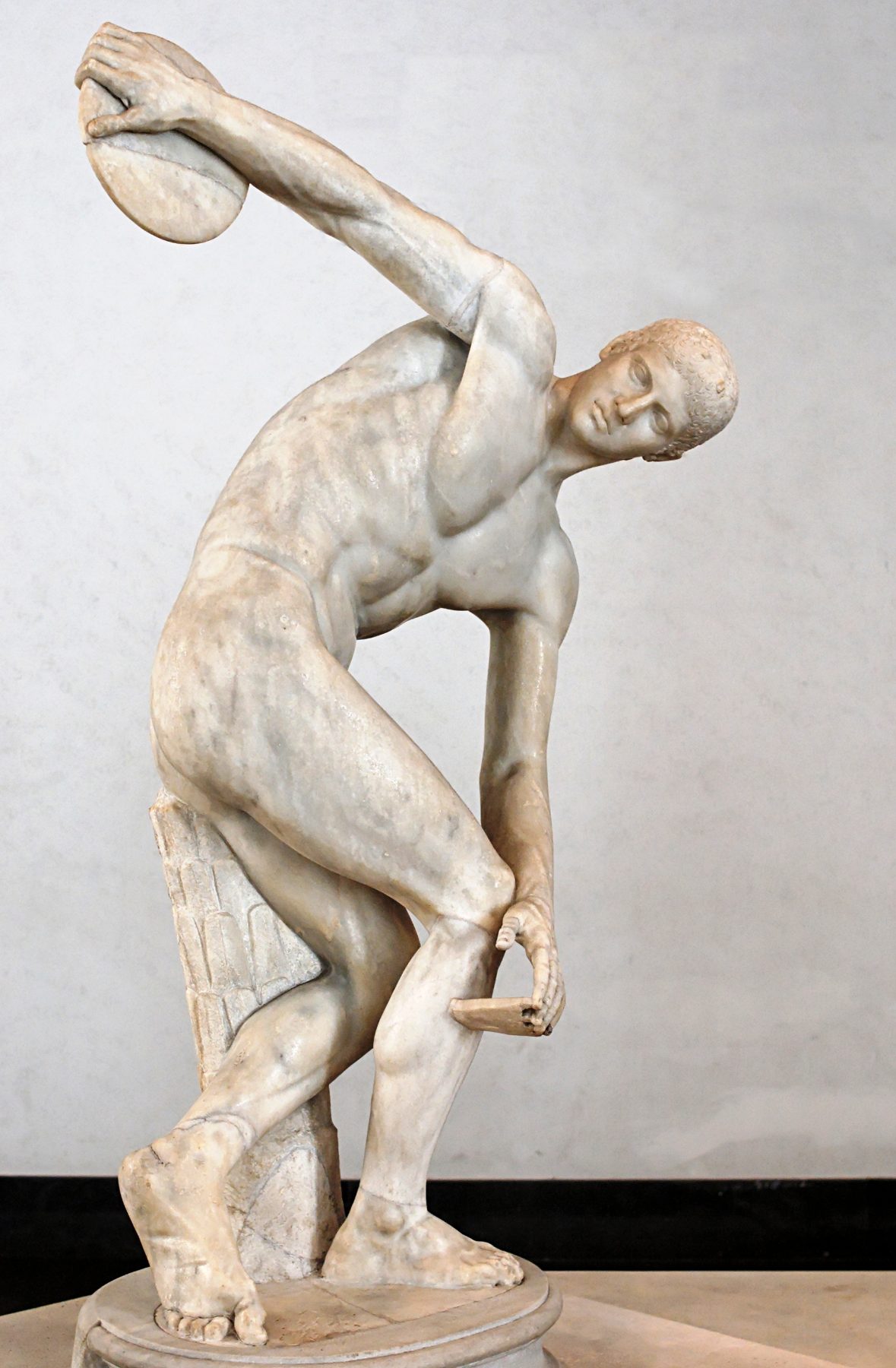
  • Discobolus, Myron, Year c. 450 BCE, Marble copy (450) — The Discobolus by Myron really captures the human body in motion, representing a significant shift from stillness to action. The sculpture is shown mid-movement, twisting its torso as the man prepares to throw the discus. The curved lines of the body create a strong sense of energy, while the proportions remain balanced and controlled. Even in motion, the body appears carefully structured, reflecting the Greek focus on ideal body form. This sculpture connects to the Doryphoros by continuing the use of balance and proportion, but fully expands it by introducing dynamic movement. In my exhibition, the Discobolus demonstrates how Greek artists combined action with ideal beauty, creating a body that appears both natural and perfected at the same time.
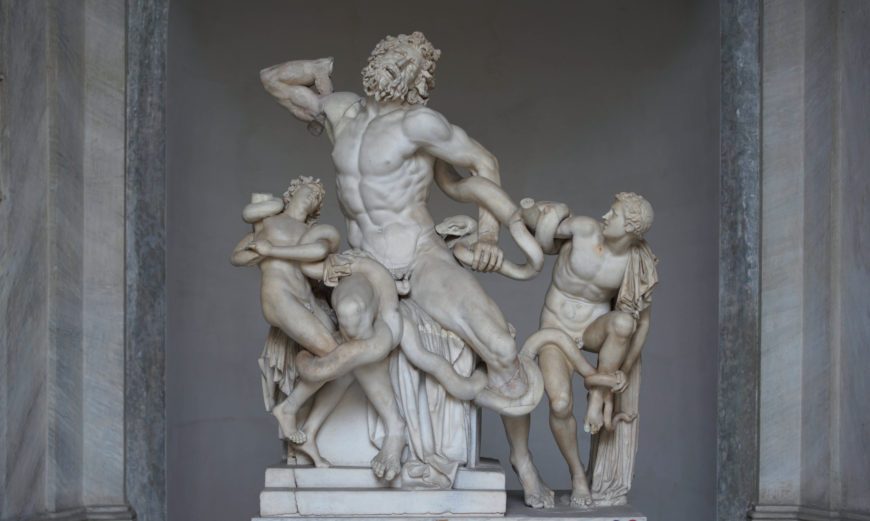
  • Laocoön and His Sons, Agesander, Athenodoros, Polydoros of Rhodes, Year c. 1st Century BCE, Marble (1) — Laocoön and His Sons represents a very dramatic shift in Greek sculpture toward emotion and intensity. The male figures are shown struggling against twisting serpents, with their bodies contorted into complex and expressive poses. The composition uses diagonal lines and deep carving to create movement and heavy tension. Unlike the earlier works that emphasize calm and balance, this sculpture highlights strain, pain, and extreme emotional expression. The muscles are exaggerated, and the faces show clear distress, adding a sense of realism and drama. In my exhibition, Laocoön builds on the movement seen in the Discobolus but pushes it even further by focusing on the emotional experience. It shows how the idea of the ideal body has changed, becoming less about perfect calmness and more about expressive power and human struggle.
Title & Curatorial Text

Title & Curatorial Text

2026
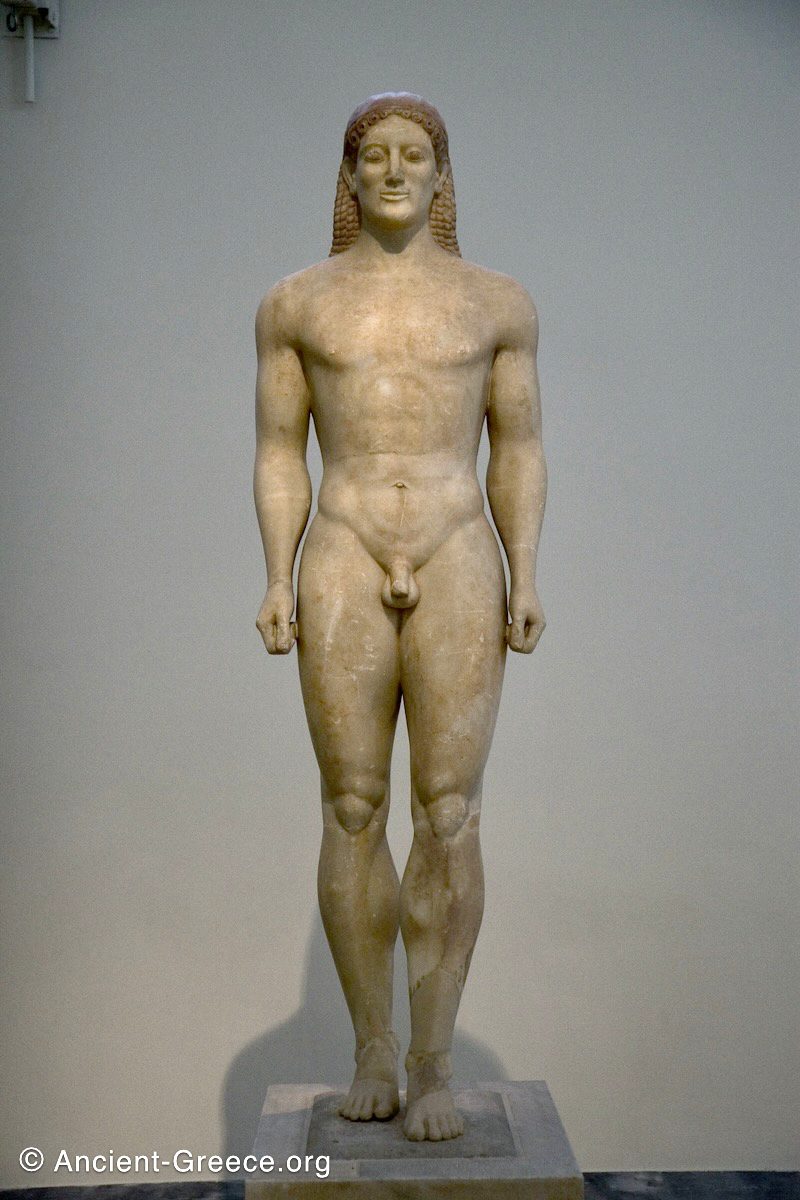
Anavysos Kouros, Unknown Artist, Year c. 530 BCE, Marble

Anavysos Kouros, Unknown Artist, Year c. 530 BCE, Marble

530
Doryphoros, Polykleitos, Year c. 440 BCE, Marble

Doryphoros, Polykleitos, Year c. 440 BCE, Marble

440
Discobolus, Myron, Year c. 450 BCE, Marble copy

Discobolus, Myron, Year c. 450 BCE, Marble copy

450
Laocoön and His Sons, Agesander, Athenodoros, Polydoros of Rhodes, Year c. 1st Century BCE, Marble

Laocoön and His Sons, Agesander, Athenodoros, Polydoros of Rhodes, Year c. 1st Century BCE, Marble

1

Immersive Experience

Walk through this gallery in 3D

Step inside a virtual gallery space. Walk up to each artwork. See them as they were meant to be seen.

Experience in 3D

React to this gallery

Guestbook

Sign in to leave a comment.

Loading…