Indigenous Self-Representation and Visual Power

5 artworks 28 views Walk Through in 3D

Artworks

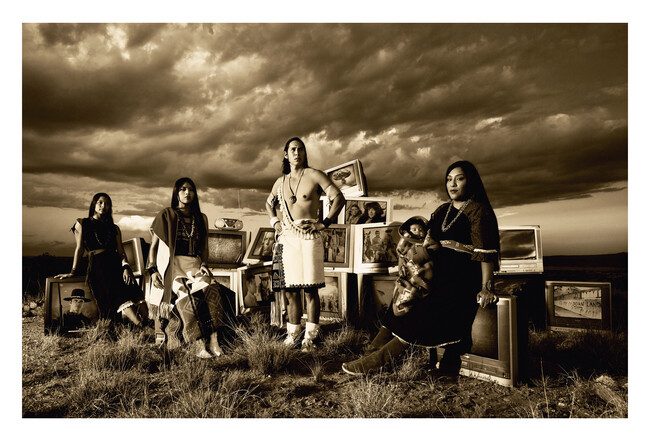
  • Cara Romero, TV Indians, 2017, photography (2026) — In this photograph of Indigenous individuals standing in an open landscape surrounded by old television sets, Cara Romero directly confronts the viewer through the subjects’ frontal positioning and steady gaze. The figures are centered in the composition, arranged in a balanced formation, and sharply contrasted against a dramatic sky, while the televisions create a visual frame around them. The black and white tonal range emphasizes clarity and contrast, directing attention to both the people and the objects. The televisions symbolize the long history of Native representation through mass media, where identity has often been simplified or distorted. By placing real individuals among these screens, Romero exposes the difference between lived experience and constructed imagery. The direct gaze of the figures is especially significant. Rather than being passively observed, they actively look back, reversing the traditional power dynamic of the viewer and the viewed. This work is effective as the opening piece because it establishes the central theme of reclaiming representation. It introduces the idea that Indigenous identity is not something to be defined by external systems like media, but something asserted by the subjects themselves. The photograph sets the tone for the exhibition by shifting the gaze from observation to confrontation.
  • Kent Monkman, The Trapper’s Bride, 2007, oil on canvas (2026) — In this painting of a mounted rider carrying another figure across a dramatic landscape, Kent Monkman uses a highly stylized composition with strong diagonal movement, dramatic lighting, and a central focus on the figures. The smooth brushwork and theatrical lighting reference nineteenth-century European academic painting, while the landscape recedes into the background to emphasize the action in the foreground. Monkman appropriates a visual style historically used to celebrate colonial expansion and reworks it to challenge those narratives. By reversing expected roles and inserting Indigenous perspectives into this format, the painting questions whose stories were historically told and how they were framed. The figures occupy a position of visual dominance, asserting presence within a system that once excluded them. This work strengthens the exhibition by showing how representation can be reclaimed through visual language itself. Instead of rejecting historical styles, Monkman uses them strategically to disrupt their original meaning. The painting shifts the gaze from passive consumption of colonial imagery to critical engagement, reinforcing the exhibition’s focus on reclaiming visual power.
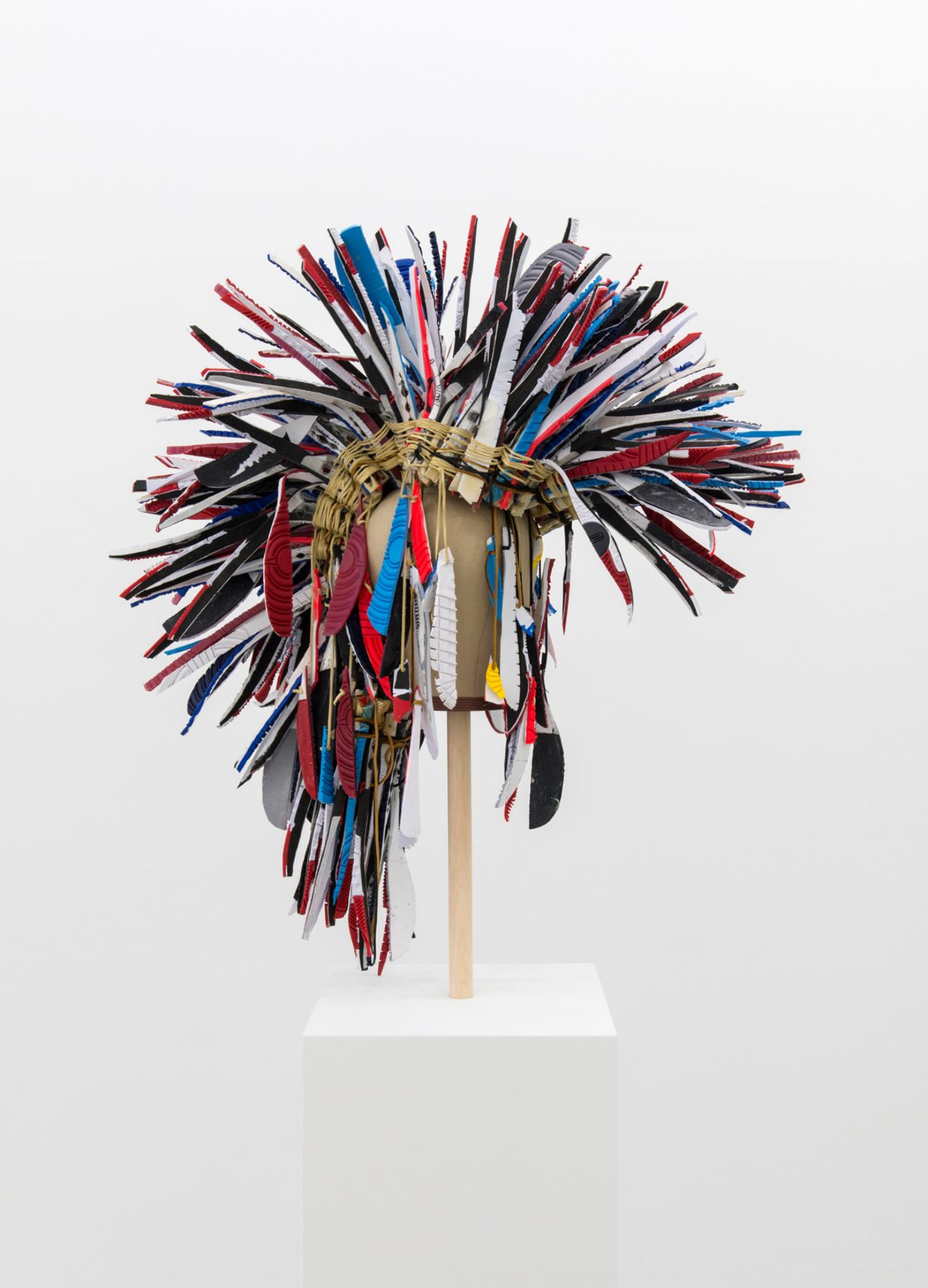
  • Jungen Warrior 2 2017 05 (2026) — In this sculpture resembling a ceremonial mask constructed from Nike Air Jordan shoes, Brian Jungen creates a symmetrical and densely layered form composed of fragmented sneaker parts. The repeated shapes and bold red, black, and white colors create visual rhythm and contrast, while the vertical structure emphasizes balance and cohesion. The transformation of recognizable consumer objects into a form associated with Indigenous ceremonial art creates tension between familiarity and cultural meaning. Viewers first recognize the sneakers, then reinterpret the overall form as something culturally significant. This shift forces a reconsideration of how meaning is assigned to objects and how cultural symbols circulate within global capitalism. Unlike the direct gaze seen in earlier works, this piece engages the viewer more indirectly. The object itself becomes the site of interpretation, requiring the viewer to actively construct meaning. This expands the idea of reclaiming representation beyond imagery and into material transformation. Jungen’s work contributes to the exhibition by demonstrating that reclaiming identity can also occur through reworking objects and systems that shape visual culture.
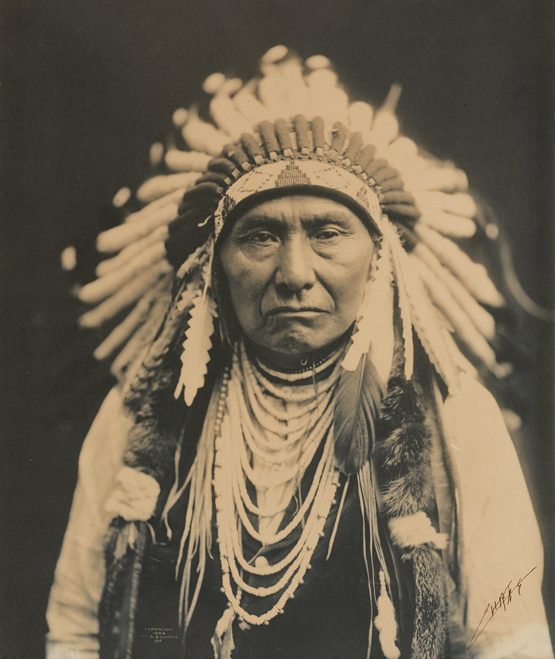
  • Edward S. Curtis, In Mut Too Yah Lat Lat (Chief Joseph), 1903, photogravure (2026) — In this portrait of Chief Joseph, the subject is shown in traditional clothing against a dark, neutral background, with soft lighting emphasizing facial features and texture. The composition isolates the figure, directing full attention to the subject while removing environmental context. The subject faces forward, creating a strong focal point. While visually striking, this photograph reflects the colonial gaze. Curtis often staged his subjects to align with romanticized ideas of Indigenous life, reinforcing the concept of the “vanishing race.” The image appears documentary, but it is shaped by external assumptions about identity and history. Including this work provides critical contrast within the exhibition. Unlike the other pieces, where Indigenous artists control representation, this image shows how identity was constructed by outsiders. Even though the subject appears to look toward the viewer, the power of representation does not belong to him but to the photographer. This work highlights why reclaiming the gaze is necessary. It demonstrates how representation can shape perception and reinforces the shift seen in the rest of the exhibition, from imposed imagery to self-representation.
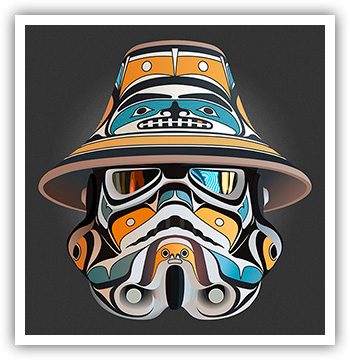
  • Andy Everson, Northern Warrior, 2014, digital print (2026) — In this digital image of a stormtrooper-like figure decorated with Indigenous patterns and feathers, Andy Everson presents a symmetrical, upright composition with bold graphic elements and clean lines. The figure stands centered and frontal, combining recognizable pop culture imagery with traditional Northwest Coast design. The fusion of science fiction and Indigenous visual language challenges the idea that Native identity belongs only to the past. Instead, the work positions Indigenous culture within contemporary and future contexts. The figure’s stance is direct and commanding, reinforcing a sense of authority and presence. The gaze in this piece is conceptual rather than literal. The figure does not simply exist to be viewed, it represents an assertion of identity that extends beyond historical frameworks. By merging cultural traditions with modern imagery, Everson redefines how Indigenous identity is visualized. As the final work, it provides a strong conclusion to the exhibition. It moves beyond critique and presents a forward-looking vision of self-representation. The work leaves the viewer with a sense of continuity, strength, and cultural agency.
Cara Romero, TV Indians, 2017, photography

Cara Romero, TV Indians, 2017, photography

2026
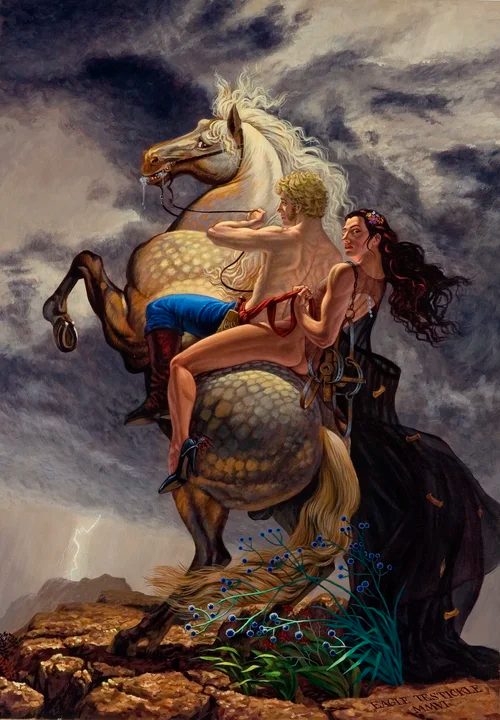
Kent Monkman, The Trapper’s Bride, 2007, oil on canvas

Kent Monkman, The Trapper’s Bride, 2007, oil on canvas

2026
Jungen Warrior 2 2017 05

Jungen Warrior 2 2017 05

2026
Edward S. Curtis, In Mut Too Yah Lat Lat (Chief Joseph), 1903, photogravure

Edward S. Curtis, In Mut Too Yah Lat Lat (Chief Joseph), 1903, photogravure

2026
Andy Everson, Northern Warrior, 2014, digital print

Andy Everson, Northern Warrior, 2014, digital print

2026

Immersive Experience

Walk through this gallery in 3D

Step inside a virtual gallery space. Walk up to each artwork. See them as they were meant to be seen.

Experience in 3D

React to this gallery

Guestbook

Sign in to leave a comment.

Loading…