Image 0 (2026) — Grief and comfort seem unrelated at first glance, but they share more in common than anyone realizes, revealing their interconnectedness. Recognizing this connection can help the audience feel understood and emotionally engaged. Both of these emotions have more to them. Grief is one word that encompasses a range of emotions, such as sadness, anger, and guilt. While comfort describes what someone feels, it can also express many other feelings, such as love, safety, warmth, and protection. Both of these words come together in one person, a mother, or in this case, the mother to everyone, the Virgin Mary.
In the Catholic religion, the followers grew scared of the paths that were talked about in the Bible, from where they would end up when they passed, and even saw Jesus Christ as an imposing figure that was so powerful and important that he wasn't within reach. So they turned their eyes to the Virgin Mary. Mary was on the same level as the Catholic followers; she was human, just like them and as the Bowers Museum states, "over the past two millennia a large devotional following has grown around the Virgin Mary." The Virgin Mary is a mother, and as a mother, she embodies both grief and comfort, expressing and deeply knowing these feelings. In Mary's life, she has shown comfort, love, and compassion not only to her son but also to others she has interacted with. But even in life, there are dark times, and the Virgin Mary had to protect her son from those who would cause him harm, and she even felt the sorrow of the loss of her only child, knowing that Mary's life would forever be changed.
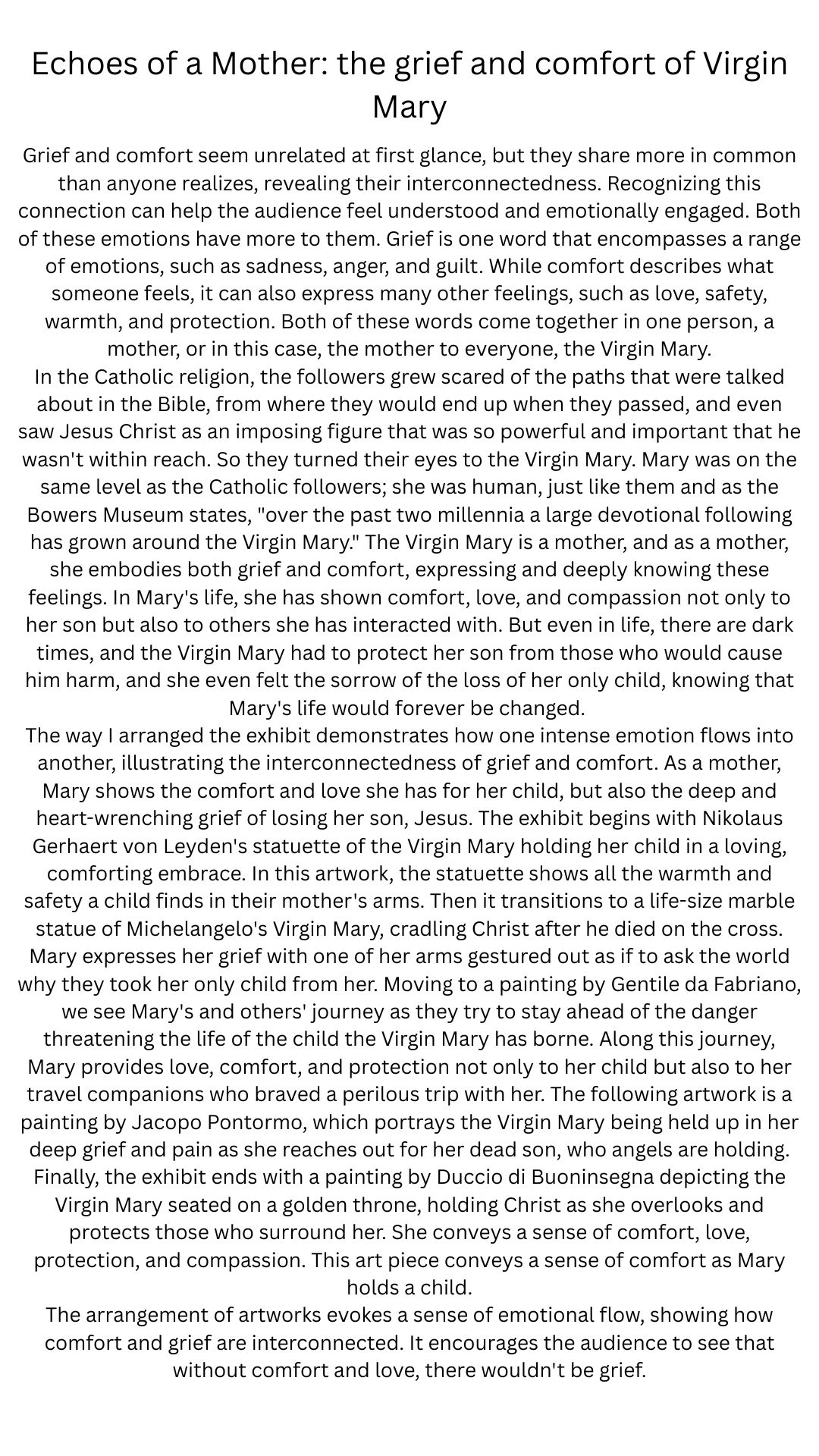
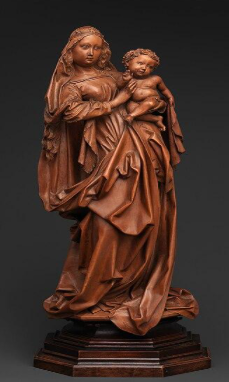
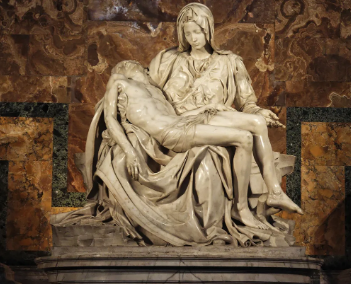
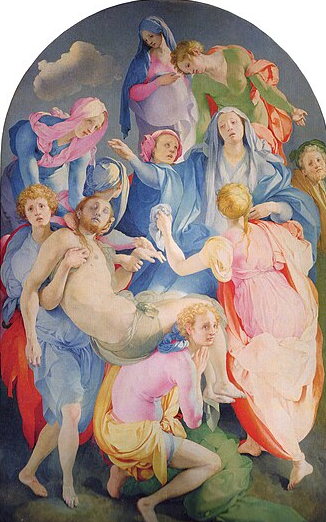
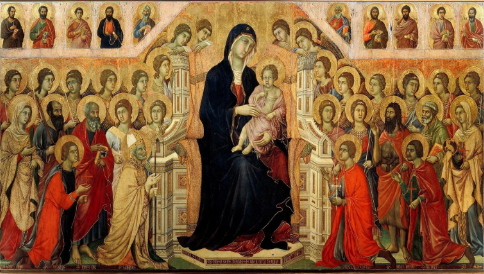
The way I arranged the exhibit demonstrates how one intense emotion flows into another, illustrating the interconnectedness of grief and comfort. As a mother, Mary shows the comfort and love she has for her child, but also the deep and heart-wrenching grief of losing her son, Jesus. The exhibit begins with Nikolaus Gerhaert von Leyden's statuette of the Virgin Mary holding her child in a loving, comforting embrace. In this artwork, the statuette shows all the warmth and safety a child finds in their mother's arms. Then it transitions to a life-size marble statue of Michelangelo's Virgin Mary, cradling Christ after he died on the cross. Mary expresses her grief with one of her arms gestured out as if to ask the world why they took her only child from her. Moving to a painting by Gentile da Fabriano, we see Mary's and others' journey as they try to stay ahead of the danger threatening the life of the child the Virgin Mary has borne. Along this journey, Mary provides love, comfort, and protection not only to her child but also to her travel companions who braved a perilous trip with her. The following artwork is a painting by Jacopo Pontormo, which portrays the Virgin Mary being held up in her deep grief and pain as she reaches out for her dead son, who angels are holding. Finally, the exhibit ends with a painting by Duccio di Buoninsegna depicting the Virgin Mary seated on a golden throne, holding Christ as she overlooks and protects those who surround her. She conveys a sense of comfort, love, protection, and compassion. This art piece conveys a sense of comfort as Mary holds a child.
The arrangement of artworks evokes a sense of emotional flow, showing how comfort and grief are interconnected. It encourages the audience to see that without comfort and love, there wouldn't be grief.
Standing Virgin and Child, Nikolaus Gerhaert von Leyden, 1470, Boxwood (2026) — Nikolaus Gerhaert von Leyden's Standing Virgin and Child showcases immense detail of the woman's clothing and features. The repetition of folds in her clothes draws the eye along her figure to her and the child's delicate faces, as well as to other characteristics that give the statuette a lifelike appearance. The way the skin shows the impressions of the woman's fingers on the child's pudgy body. There is a contrast between the wood of the woman and child, which is a lighter colour, and the dark mahogany wood of the pedestal that the woman is standing on. It shows the elegance and comfort that mothers seem to carry in their very beings, as in the Virgin Mary, who is considered Mother to all in the Catholic religion. She shows a monumentality, with a feeling of something larger than life and power, but it also gives a softer side. It showcases Nikolaus's depiction of private devotion to the followers of the Catholic faith.
Pietà, Michelangelo, 1498, marble sculpture, St. Peter's Basilica, Vatican City (2026) — Michelangelo's Pieta, which means "pity" in Italian, conveys the deep emotion of grief as the Virgin Mary cradles her dead son, Jesus. The carvings intricately detail the lines and muscles of Jesus, as well as the delicate, smooth features of Mary's face and her clothing. The details of Mary's clothing repeat folds to indicate her kneeling posture. These details draw the eyes along the features of the two bodies, up to the emotions depicted on the Virgin Mary's face, to showcase her grief and sadness. By highlighting Mary's sorrow, the sculpture invites viewers to empathise with her loss, fostering a personal connection to her grief and the universal experience of mourning. This marble statue shows an intense depiction of the grief of a mother as she faces not only the loss of her child, but also the life she lives will be forever empty without her child and the love she once had.
Rest During the Flight into Egypt, Gentile da Fabriano, 1423, Tempera on wood (2026) — Gentile da Fabriano's Rest During the Flight into Egypt displays figures making their way to a city in the distance, each with distinct colors symbolising their roles, such as the Virgin Mary, who stands out as the maternal figure. Painting the figure in different colors helps viewers interpret their significance and the narrative's depth. The figure that stands out from the others in the group is the Virgin Mary, who is riding a donkey with her child. Gentile da Fabriano shows maternal love and comfort, the way Mary cradles her child to protect him from the dangers they could face along their journey. This artwork is like a legend come to life, telling a lesson: even when all there seems to be is darkness, there is always light, and with this art piece, the maternal love and comfort Mary displays is like that very light.
The Deposition from the Cross, Jacopo Pontormo, 1525–1528, Oil on wood, Capponi Chapel, Church of Santa Felicita, Florence (2026) — Jacopo Pontormo's The Deposition from the Cross highlights the Virgin Mary's profound grief as she reaches for her son, Christ, who has passed. The artist creates contrast with the different colours he uses to paint the figures. Jacopo Pontormo shows contrast of the different colors he dresses the figure in. Even with the light colours, which are normally used to convey a happier display of emotions, Jacopo Pontormo uses them here to draw the eye across the painting to the raw emotion of grief on the figures and the Virgin Mary. The painting also shows the detailing of the clothing, with multiple folds, and the highlights of the blond curls on some of the figures. This artwork shows the immense grief and sadness of a mother as she watches her dead child, who is out of reach of her loving arms and will be for the rest of her life.
Maestà, Duccio di Buoninsegna, 1308–1311, Tempera and gold on wood (2026) — Duccio di Buoninsegna creates a scene of peace and harmony with simple emotions, placing every figure where he did and how he did. The woman and child, who are the Virgin Mary and Christ, sitting on the throne, are depicted as a mother to all, shielding everyone from the world's darkness in her arms, showing the comfort of a mother. Duccio paints a contrast between the dark colours the Virgin Mary wears to display her as a protector and the light colours of the other figures surrounding the throne, who wear gold, cream, and red. The depiction of the church's authority through the contrast in colors should inspire respect and confidence in viewers. The people who surround the throne display loyalty to the mother, serving her and protecting those in need as she does, reinforcing the church's role as a protector.He draws the power of protection back to the church in this painting, when the church's authority and power were almost lost among its followers, reminding viewers of its protective presence.
Image 0
2026
Standing Virgin and Child, Nikolaus Gerhaert von Leyden, 1470, Boxwood
2026
Pietà, Michelangelo, 1498, marble sculpture, St. Peter's Basilica, Vatican City
2026
Rest During the Flight into Egypt, Gentile da Fabriano, 1423, Tempera on wood
2026
The Deposition from the Cross, Jacopo Pontormo, 1525–1528, Oil on wood, Capponi Chapel, Church of Santa Felicita, Florence
2026
Maestà, Duccio di Buoninsegna, 1308–1311, Tempera and gold on wood
2026
Immersive Experience
Walk through this gallery in 3D
Step inside a virtual gallery space. Walk up to each artwork. See them as they were meant to be seen.