Expressions of Dance Through Impressions

5 artworks 30 views Walk Through in 3D

Artworks

  • Curatorial Statement (2026)
  • Blue Dancers - Edgar Degas, 1887, Pastel on Paper (2026) — French painter Degas’ impressionism artwork “Blue Dancers” (1888-89), gives a glimpse into the unseen moments of dancers rehearsing backstage before a performance. Done with pastel on paper, the artwork portrays four dancers, the focal point of the art piece, dancing and adjusting their light blue dresses, holding different poses in front of a background of oranges, greens, blues, yellows, purples, and grays. Many of their facial features are not fully defined in the work, with the majority of their faces obscured by shadows, but also purposefully undefined due to the nature of the art style. The painting portrays the hard work and commitment of dancers to their craft that often goes unseen by the audience, who always sees the end result of their hard work.
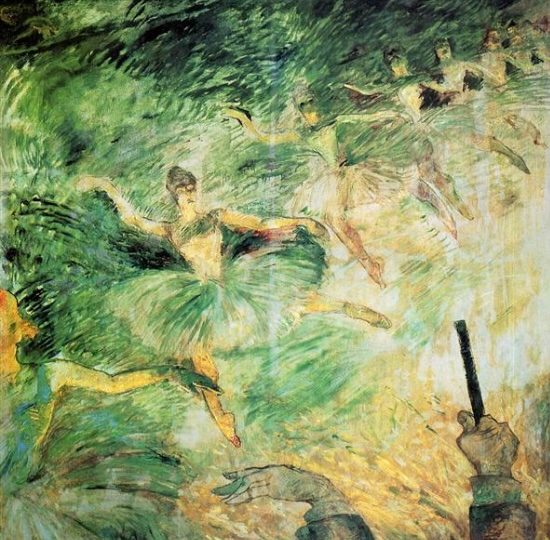
  • Ballet Dancers - Henri de Toulouse-Lautrec 1885, Oil on Canvas (2026) — Henri de Toulouse-Lautrec’s impressionist painting “Ballet Dancers” (1885) captures the grace of ballet. The painting, done with oils, depicts a group of dancers performing choreography diagonally across the canvas, with the focal point being the ballerina fully seen, closest to the point of view, who is the most defined and sits left-center of the canvas. The lack of world building in the artwork around the dancers gives the piece an abstract quality, though the conductor's hands placed in the bottom right suggest that the piece takes place in a performance hall of some kind. Using swirling, light brush strokes of greens, blacks, yellows, and whites, Toulouse-Lautrec captures the movement of the performance, rather than a solidified, still portrayal. While capturing the fleeting, temporary movements in ballet, the painting also highlights the technique, discipline, and coordination of ballet dance, with all dancers in the painting performing the same choreography.
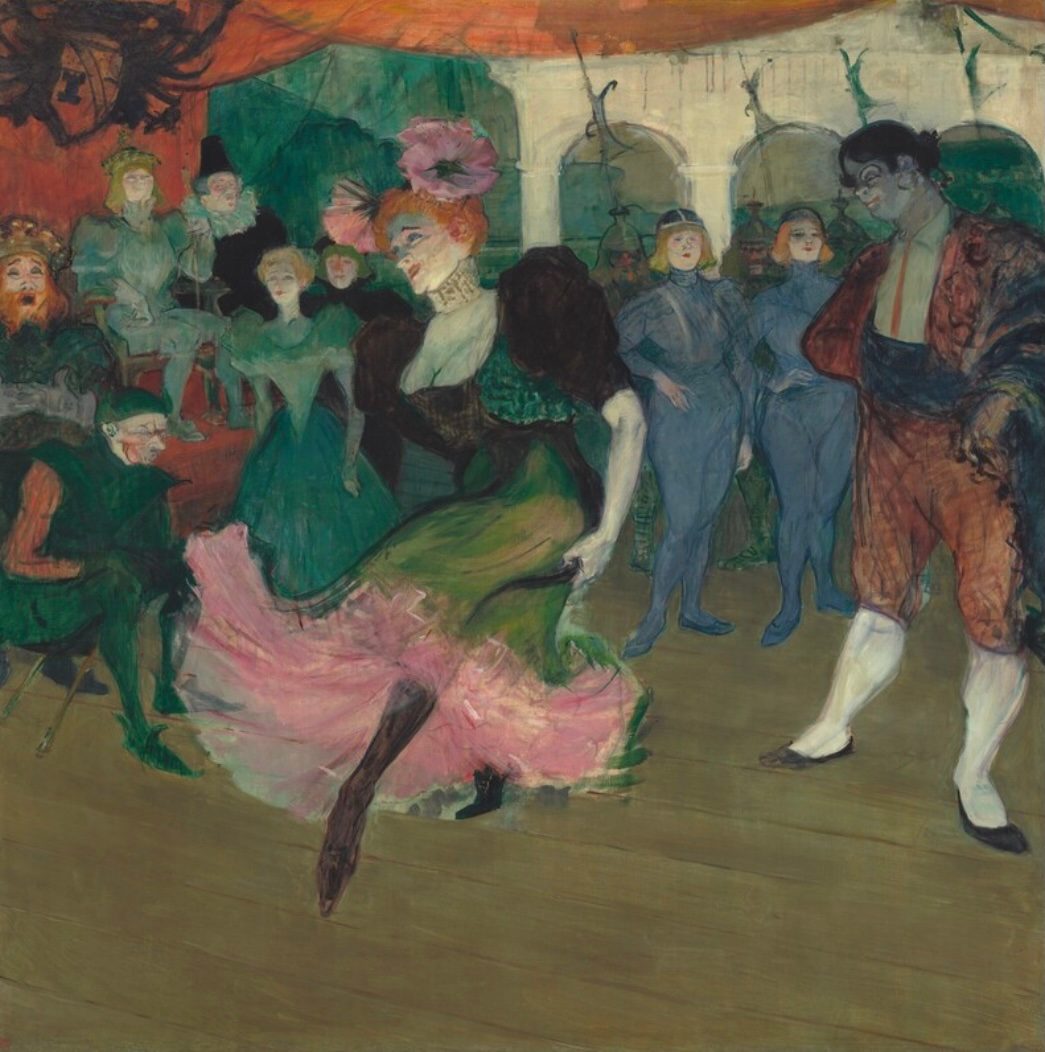
  • Marcelle Lender Dancing the Bolero in 'Chilperic' - Henri de Toulouse-Lautrec 1885, Oil on Canvas (2026) — Henri de Toulouse-Lautrec’s painting “Marcelle Lender Dancing the Bolero in 'Chilperic'” depicts singer-dancer Marcelle Lender dancing joyfully with a flowing dress of pinks, greens, and black. The painting, done with oils in an impressionism style, is set in a covered location, with Lender and other performers standing on top of a wooden floor, with an orange-red canopy above them. Various performers stand around her, with an audience sitting to the left of the canvas. The positioning of Marcelle in the center of the canvas makes her the clear focal point of the work. The opening, twirling movement of her dress and expression on her face suggests big, exciting movement which, with the setting, creates an exciting, theatrical atmosphere. The canopy above, the white structure in the background, and the spectators surrounding Marcelle create visual depth and a spatial world for the piece without deferring attention away from the subject. The whole scene portrays the lively qualities that many dance performance pieces hold, with Marcelle dancing with joy, passion, and flair. The painting also honors Marcelle Lender and her significance to the Paris performing arts scene at the time.
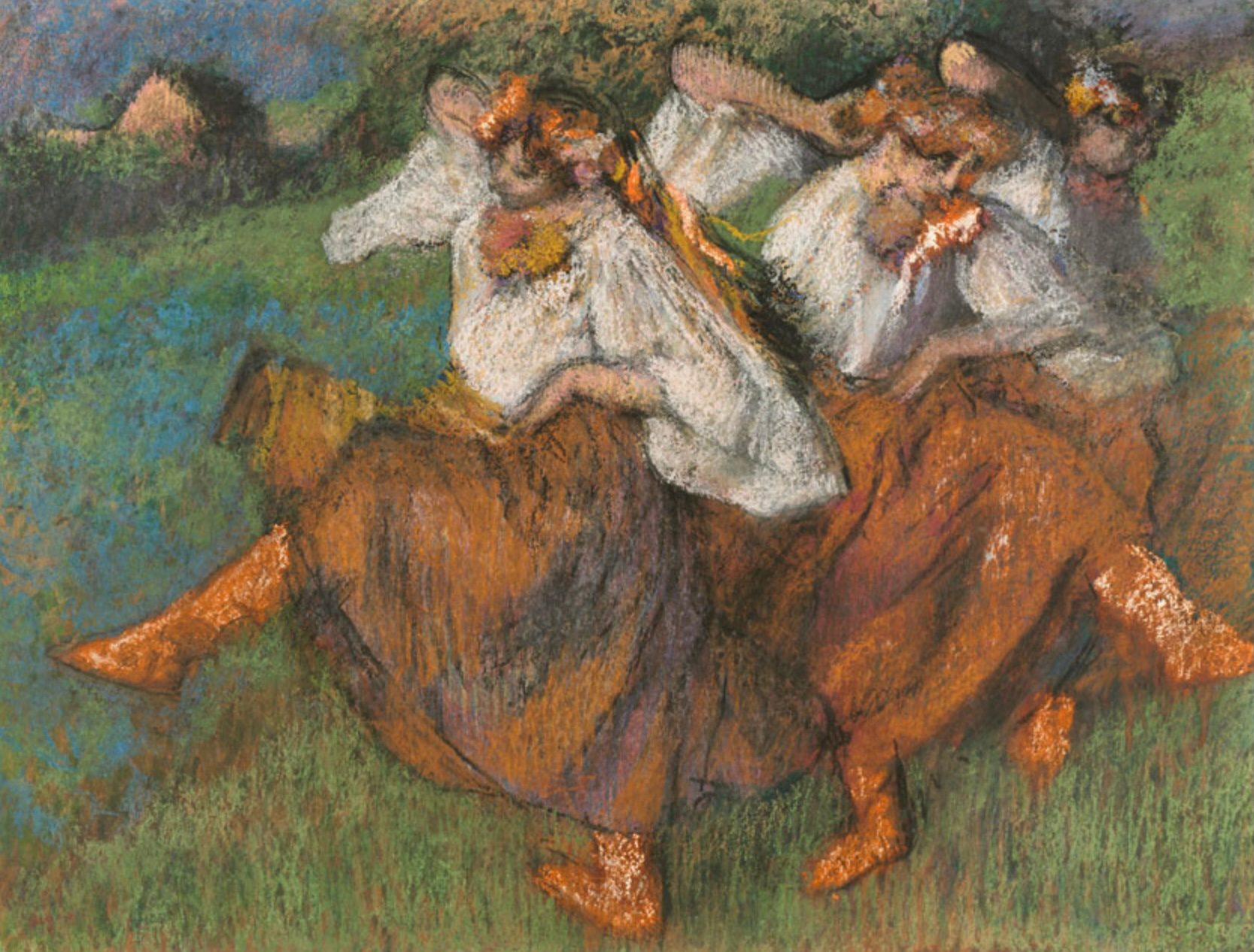
  • Russian Dancers - Edgar Degas 1899, Pastel on Paper (2026) — Edgar Degas’ painting “Russian Dancers” (1899) is done in an impressionist style, using pastels to capture the movement of three Ukrainian women performing a traditional folk dance. The dancers, who are the focal point of the painting, wear orange skirts and a white, long sleeve top, with flowers in their hair. The painting takes place outside, with the setting being a green meadow at sunset, with shrubbery and a house in the distance. Using a warm color palette for the dancers, as well as warm dusk lighting, the dancers stand out in contrast against the cool greens and blues of the meadow they dance upon, creating a satisfying scene that feels balanced and grounded. By using impressionism, Degas captures the movement of the dancers, focusing more on their motions rather than precision and detail. This technique captures the feeling of the dance, which appears fluid and free, contrasting other forms of dance such as ballet which often values precise movement and technique. Overall, “Russian Dancers” appreciates traditional folk dance, portraying a scene of cultural pride, expression, and spirit.
Curatorial Statement

Curatorial Statement

2026
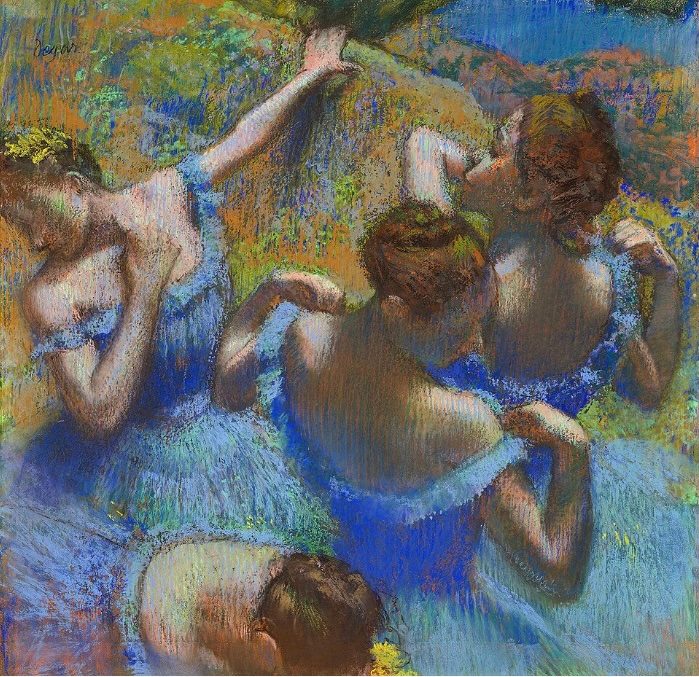
Blue Dancers - Edgar Degas, 1887, Pastel on Paper

Blue Dancers - Edgar Degas, 1887, Pastel on Paper

2026
Ballet Dancers - Henri de Toulouse-Lautrec 1885, Oil on Canvas

Ballet Dancers - Henri de Toulouse-Lautrec 1885, Oil on Canvas

2026
Marcelle Lender Dancing the Bolero in 'Chilperic' - Henri de Toulouse-Lautrec 1885, Oil on Canvas

Marcelle Lender Dancing the Bolero in 'Chilperic' - Henri de Toulouse-Lautrec 1885, Oil on Canvas

2026
Russian Dancers - Edgar Degas 1899, Pastel on Paper

Russian Dancers - Edgar Degas 1899, Pastel on Paper

2026

Immersive Experience

Walk through this gallery in 3D

Step inside a virtual gallery space. Walk up to each artwork. See them as they were meant to be seen.

Experience in 3D

React to this gallery

Guestbook

Sign in to leave a comment.

Loading…